Skip to content
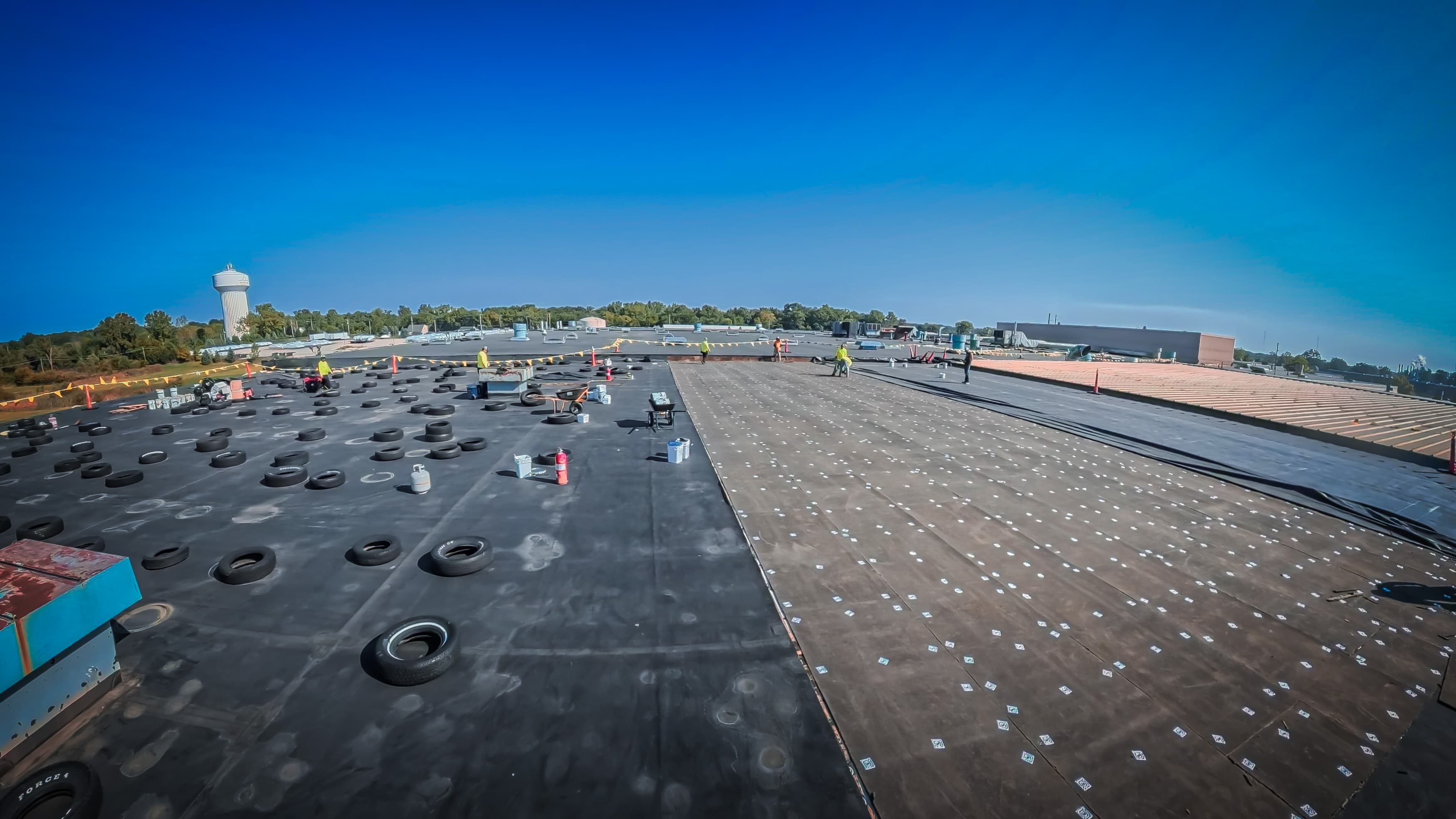
One roof, two halves: the old ballasted membrane still under tires on the left, the new insulation and membrane going down on the right.
Our core business since 1986

Commercial & industrial
roofing in Fort Wayne.

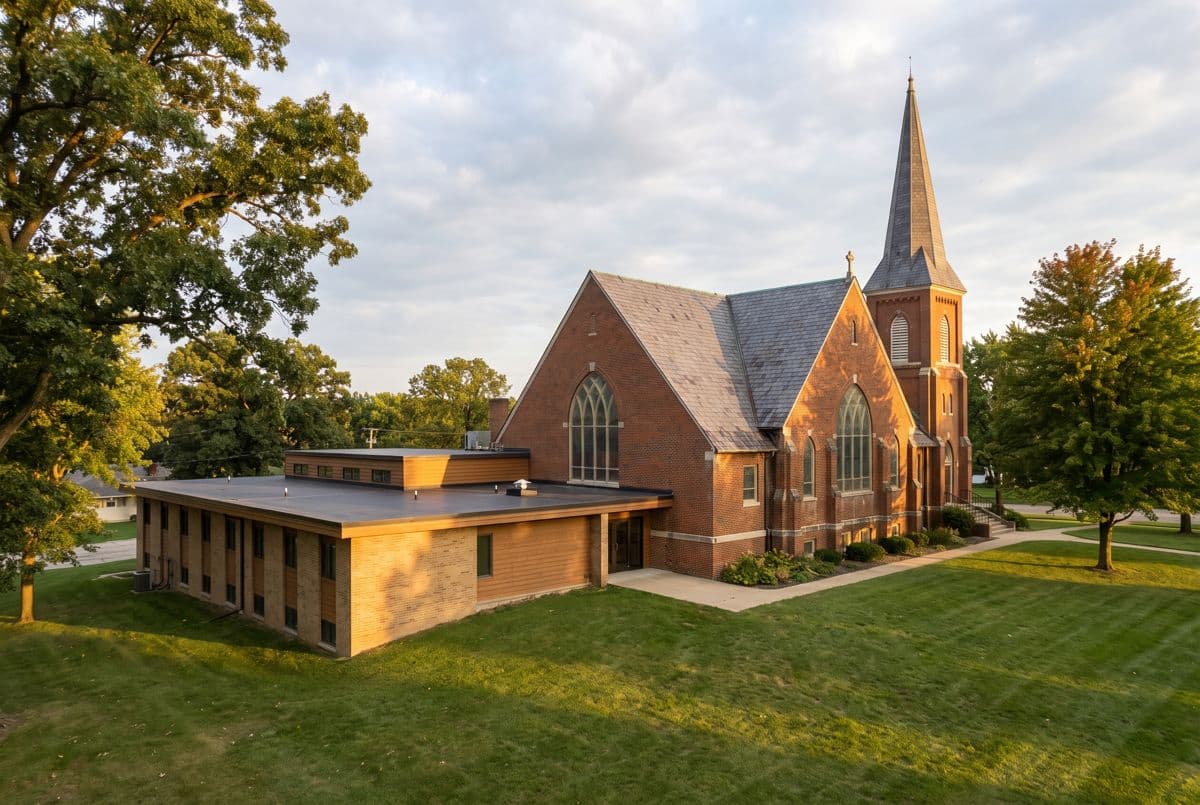
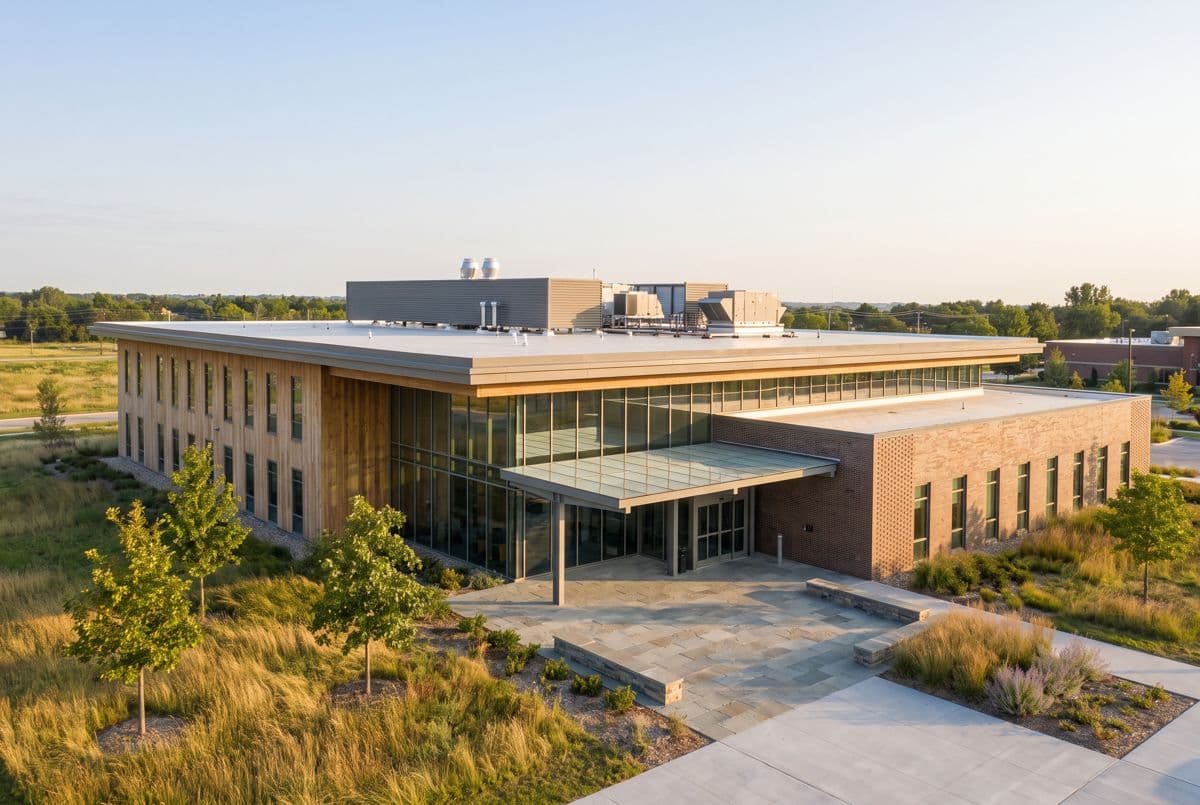
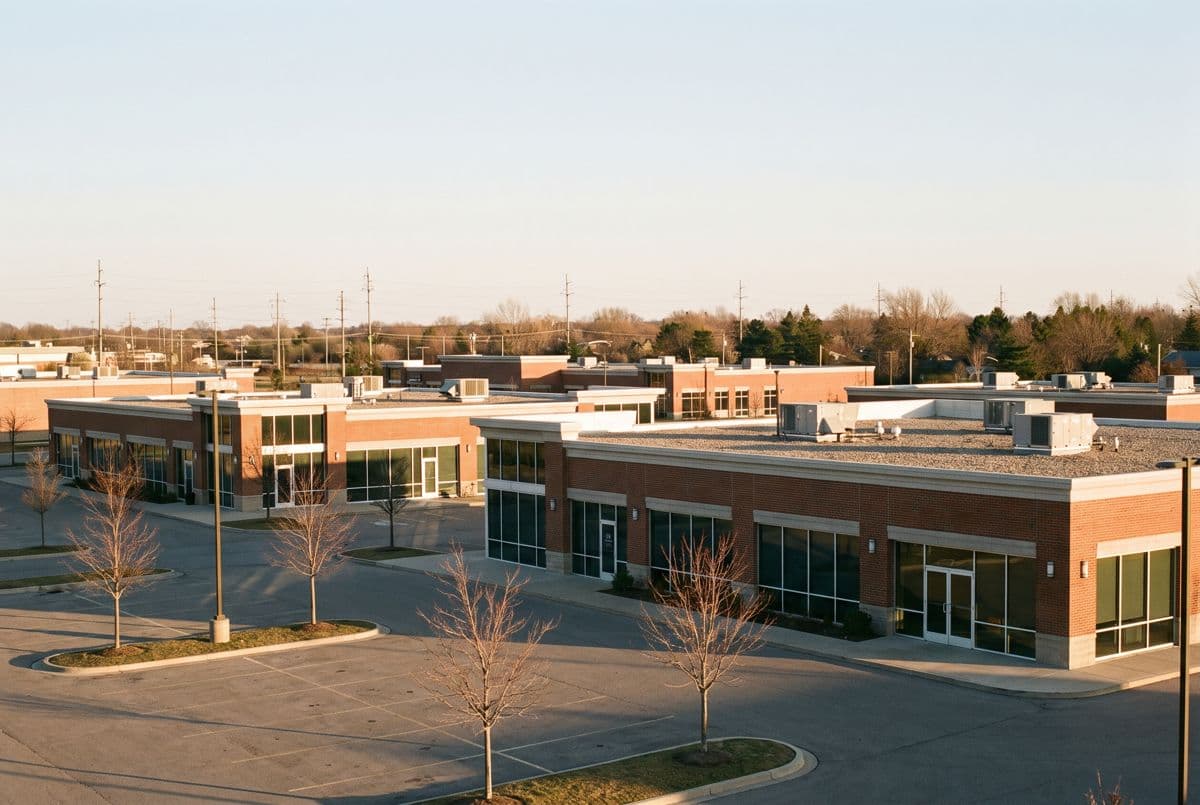
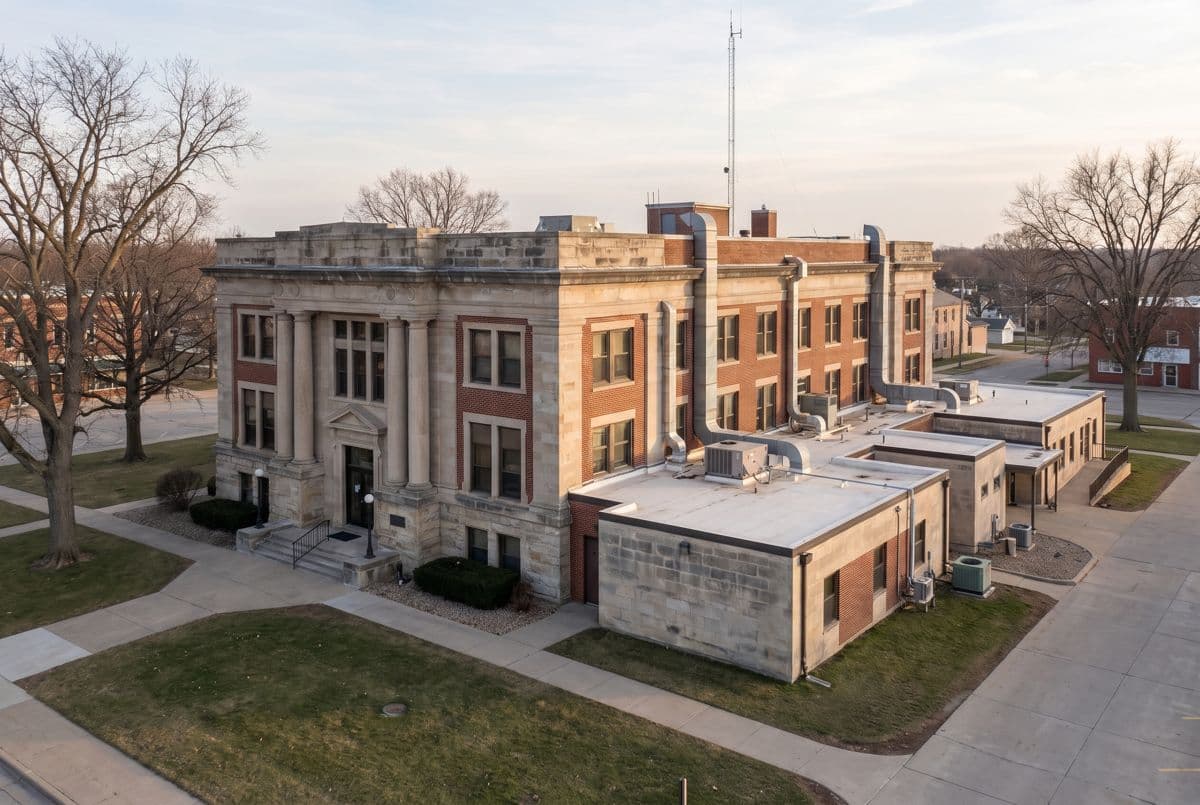
Schools, manufacturing plants, churches, healthcare campuses, distribution centers, and municipal buildings across Northeast Indiana. This is the work we've done for more than four decades — and the reason building owners keep our number.

40+
Years in Fort Wayne
Founded 1986
100+
Tecta America locations
Nationwide network
4500+
Roofing professionals
Behind every job
11
Service lines
Self-performed in-house
How we approach a building

We'd rather tell you not to replace it.

Roof replacement is the biggest line item most buildings will ever spend on keeping weather out, and it is also the easiest thing for a contractor to sell. So we start somewhere else: is replacement actually necessary?

Core cuts tell us whether the insulation under the membrane is wet. Where the roof calls for it, moisture scanning maps how far the saturation spreads. A drainage review tells us whether the roof was ever built to shed water in the first place. Those three findings decide everything — because a dry, structurally sound roof can often be restored or recovered for a fraction of tear-off cost, while a saturated one can't be saved by any surface treatment at any price.

You get that assessment in writing, with photos, whether or not the answer is good for us. That's not generosity — it's how a roofing company stays in business in the same city for four decades.

01

Assess

Walk the roof, take cores, scan for moisture, review drainage and rooftop equipment.

02

Report

Photos of what we found and what we did, plus our read on the roof and what to plan for. Deeper tracking is available through Tecta Tracker.

03

Execute

Repair, restore, recover, or replace — phased around how your building actually operates.

Fig. 01 — low-slope assembly

What's actually under the membrane.

Every commercial roof is a stack of decisions. Here's the stack — and what fails first when one of those decisions is made on price alone.

HEAT-WELDED SEAM01Edge metal & coping02Single-ply membrane03Cover board04Polyiso insulation05Vapor retarder06Structural deckFIG. 01 — LOW-SLOPE ASSEMBLYNOT TO SCALEFWR / 1986
Hover the drawing

Single-ply membrane

TPO / EPDM / PVC

The waterproofing layer everything else exists to protect. Seams are heat-welded on TPO and PVC, seam-taped on EPDM. Thickness and attachment are chosen from wind uplift zones, not habit.

Roof design, not just roofing

Our President and Vice President came up through the architectural and roof-consulting world.

Most roofers learn the roof from the top down. Ours learned it from the drawing out — which changes what happens before a single panel goes up.

30+
years of roof consulting between them
  1. 01
    The best roof fit for your building

    We match the system to the building, how it's used and how long you plan to own it — the roof that fits, not the one that's easiest to sell.

  2. 02
    Design-build and value engineering, without compromising performance

    We work alongside the architect and general contractor to engineer cost out of a project without engineering the roof's performance out with it.

  3. 03
    Personally overseen, completed to specification

    The people who helped design the roof are on the roof, making sure it is built the way it was specified.
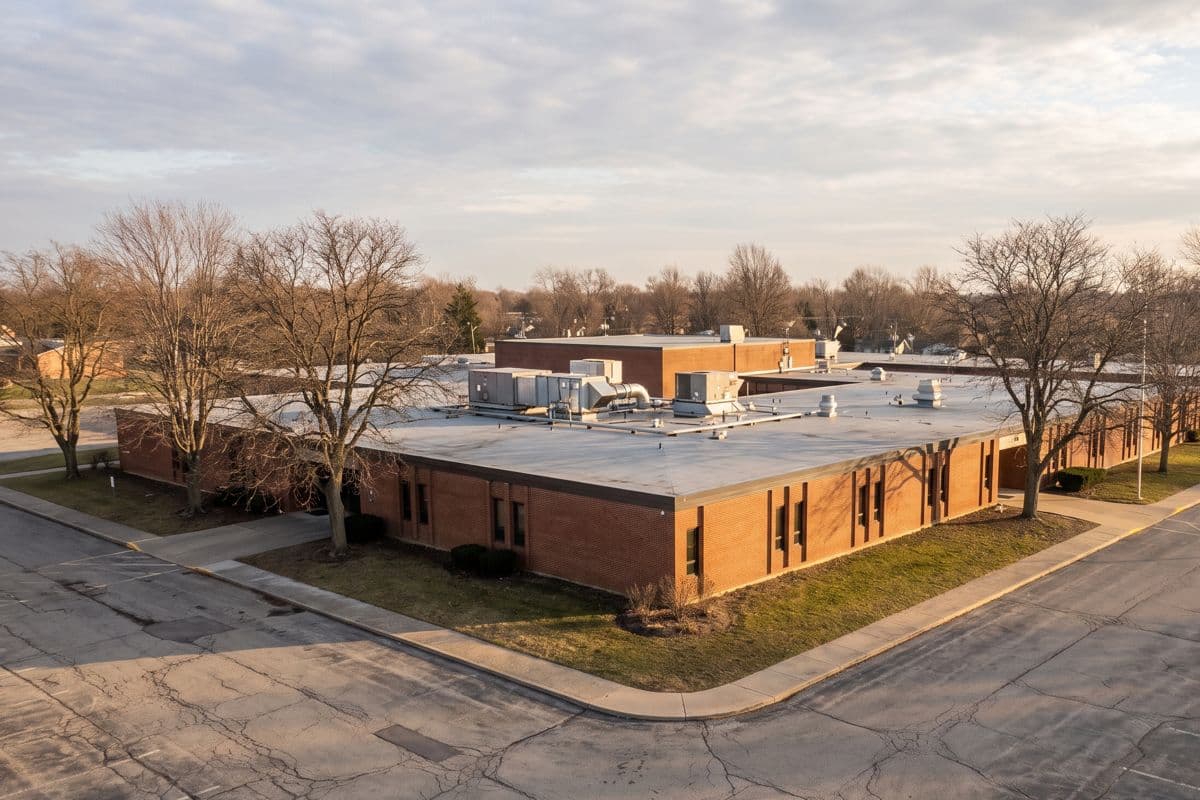
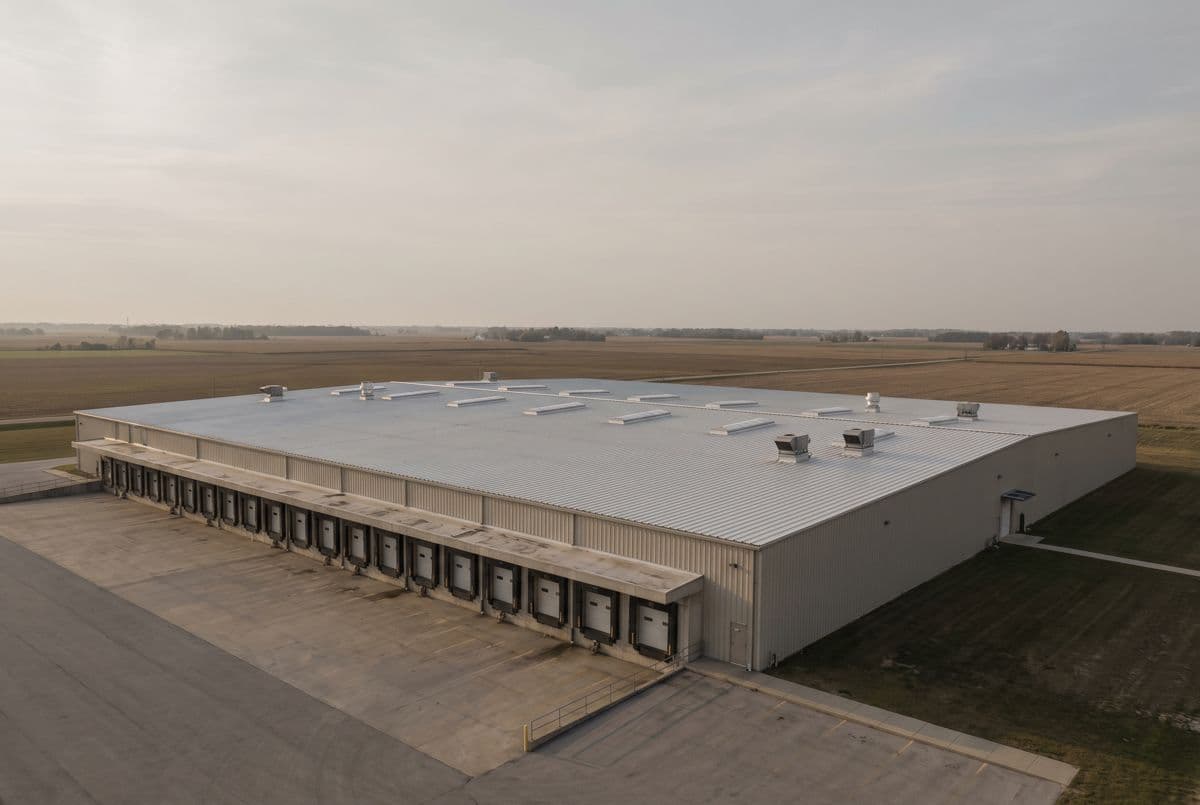
Infrared, before and after

We look under the roof before we cover it. And after.

A drone-mounted infrared scan shows the moisture you can't see from the deck. Before a recover, it means we are not sealing a bad situation under a new membrane. After installation, it is how we prove the roof is watertight — not just finished.

  • Before a recover: no wet insulation hidden under new membrane
  • After installation: verified watertight, not just walked off
  • Scan imagery included in your close-out documentation
Commercial service lines

Eleven things we self-perform.

One contractor, one point of accountability. No hand-off at the sheet metal, no finger-pointing at the waterproofing transition.

Roof Replacement & Re-Roofing

Full tear-off, recover, and retrofit systems for low-slope commercial and industrial buildings — engineered for the specific building, not a catalog default.

Details →

Leak Detection & Repair

Fast, precise leak diagnosis on any low-slope system — with photo documentation so you know exactly what failed and why.

Details →

Preventative Maintenance

Scheduled inspections, housekeeping, and minor repairs that routinely add 5–10 years to a roof's service life for a fraction of replacement cost.

Details →

Roof Asset Management

A managed program for multi-building portfolios: condition surveys, digital roof files, remaining-life forecasting, and a funded replacement schedule.

Details →

Emergency Leak Response

Priority response for active leaks, storm damage, and wind events — temporary dry-in first, permanent repair after.

Details →

New Construction

Roofing and waterproofing scope for ground-up commercial construction, delivered as a subcontractor or design-assist partner.

Details →

Architectural Sheet Metal

Custom coping, fascia, gutters, wall panels, and standing-seam metal roofing — fabricated to the drawing, not approximated on site.

Details →

Roof Coatings & Restoration

Silicone and acrylic restoration systems that renew an aging but structurally sound roof — often at half the cost of tear-off, with a new warranty.

Details →

Waterproofing

Plaza decks, parking structures, foundations, and below-grade waterproofing — the wet work that isn't technically roofing but always lands on the roofer.

Details →

Safety Solutions

Permanent guardrail, tie-off anchors, skylight protection, and roof-access review to keep your people — and your maintenance vendors — compliant.

Details →

Government & Cooperative Purchasing

Public bid, prevailing wage, and cooperative purchasing contracts that let public entities skip the bid cycle without skipping procurement rules.

Details →
Fig. 02 — system selection

TPO, EPDM, PVC, mod-bit, BUR, metal.

We install all six. Which one belongs on your building is a function of the deck, the exposure, the rooftop equipment, and the horizon you're planning against.

TPO Single-Ply

Thermoplastic polyolefin

The most-installed commercial membrane in America. Heat-welded seams, bright white reflectivity, and a strong cost-to-life ratio.

  • Heat-welded seams are the strongest in single-ply
  • Highly reflective — real cooling savings
  • Cost-effective per square foot
  • Wide range of thicknesses and warranties
What to watch

Quality varies sharply by manufacturer. We install only from certified, long-track-record lines.

Service life
20–30 yrs
Best suited to
Warehouses, retail, schools
Family
Thermoplastic polyolefin

We install all six. Which one belongs on your building depends on the deck, the exposure, the budget, and what your rooftop equipment puts on the membrane — not on what we happen to stock.

Local roots. National strength.

The people are from here.
The resources aren't limited to here.

In 2018 Fort Wayne Roofing joined Tecta America — the largest commercial roofing contractor in the United States. Nothing about who answers the phone changed. What changed is what stands behind the answer.

Local

Quoted, managed, and installed by the Fort Wayne team out of 4320 Ardmore Ave.

National

100+ Tecta locations and 4,500+ roofing professionals nationwide.

Storm capacity

When a regional event overwhelms local contractors, we pull crews and material from the national network.

Warranty reach

Warranty service on your buildings outside Indiana, handled by the same organization.

Commercial FAQ

Questions building owners ask.

Often it can be repaired, restored, or recovered — and we'll tell you that even though replacement is the bigger sale. We take core cuts and moisture readings to see whether the insulation below the membrane is dry. If it is, a coating or recover system can add ten to twenty years for a fraction of tear-off cost. If it's saturated, no surface treatment will save it.

All the major low-slope systems: TPO, EPDM, and PVC single-ply; modified bitumen; built-up roofing; fluid-applied restoration coatings; and metal, including standing-seam retrofits over failing flat roofs. We also self-perform architectural sheet metal and waterproofing.

That's most of what we do. Schools get summer windows. Plants get phased sections around production and shutdown schedules, including nights and weekends. Healthcare gets infection-control-aware practices and low-odor systems. Churches get schedules that never touch a weekend service.

A real person from the Fort Wayne office contacts you — typically within one business day — to understand the building and the problem. For most commercial work the next step is an on-site inspection and a written condition assessment with photos, followed by a detailed proposal. Active leaks get triaged immediately.

Yes. If water is actively coming into your building, call (260) 422-9529 — active leaks are triaged ahead of scheduled work, and after-hours emergency calls are available. The first priority is a temporary dry-in to stop the damage; the permanent repair gets scheduled once conditions allow.

Yes — fully licensed, bonded, and insured, with bonding capacity for large public and private projects. Certificates of insurance and bonding documentation are available on request for any project.

Water coming in right now?

Emergency leak response. We dry the building in first and fix it properly after.

Next step

Let's get a written assessment on your roof.

Tell us about the building. A member of the Fort Wayne team follows up, usually within one business day.

Serving Fort Wayne since 1986 · A Tecta America Co.

Call NowGet a Quote